Quebec IBD Genetics Consortium

(1996-2017)

Brief History. The Quebec IBD Genetics Consortium (QIGC) has its origins (1996-2002) in a group of five academic clinical centers that collected DNA samples and clinical information for IBD genetics projects.  In 2002, it played an integral part in the creation of the North American IBD Genetics Consortium (IBDGC), which was constituted by six different centers across Canada and the USA.

Mission. The purpose of the QIGC has been to discover and examine the influence of genetic variables on IBD in the Quebec population and to collaborate internationally to have an impact on IBD worldwide. The objective is to translate these genetic discoveries in to better understanding of the pathogenesis of IBD and to fulfill the mission of improving the diagnostic, as well as preventative and management strategies for these chronic inflammatory diseases.

Consortium members. Here are the members of the QIGC:

John D. Rioux, PhD (Leader)
Whitehead/MIT Center for Genome Research
Institut de cardiologie de Montréal, Université de Montréal 
Alain Bitton, MD (Co-Leader)
Royal Victoria Hospital
McGill University 
Guy Aumais, MD
Hôpital Maisonneuve-Rosemont
Université de Montréal
Gilles Jobin, MD
Hôpital Maisonneuve-Rosemont
Université de Montréal 
Edmond-Jean Bernard, MD
Hôpital Hôtel Dieu
Université de Montréal
Raymond G. Lahaie, MD
Hôpital Saint-Luc
Université de Montréal 
Albert Cohen, MD
Jewish General Hospital
McGill University 
Diane Langelier, MD
Hôpital Fleurimont
Université de Sherbrooke 
Colette Deslandres, MD
Hôpital Sainte-Justine
Université de Montréal 
Pierre Paré, MD
CHAUQ – Hôpital St – Sacrement
Université Laval 
Sylviane Forget, MD
Montreal Children’s Hospital
McGill University 
Ernest G. Seidman, MD
Hôpital Sainte-Justine
Université de Montréal 
Daniel Gaudet, MD
Complexe hospitalier de la Sagamie & Université de Montréal 
Gary E. Wild, MD
Montreal General Hospital
McGill University 

IBD Genomic Medicine Consortium

A Brief History: The iGenoMed Consortium was created in 2012 to take full advantage of existing and emerging genomic technologies and apply these to powerful retrospective and prospective cohorts to better understand the biological differences between patients with IBD and to develop precision medicine approaches to improve diagnosis and treatment of IBD, and to advance our goal of disease prevention and/or achievement of durable remission.

Objectives: (1) Discover the biological heterogeneity that underlies the known clinical heterogeneity in IBD; (2) Develop genomic-based predictive tools to better diagnose and treat patients with (3) perform quantitative and qualitative assessment of physician and patient perceptions on different approaches to selecting IBD treatment options (i.e., current practice versus our approach); (4) identify obstacles – practical and regulatory – potentially hindering the implementation of our predictive tests.

Flagship Projects:

Project 1 Identifying biological heterogeneity in CD 
Project 2Developing multi-omic tools to support rapid diagnosis of CD
Project 3iGenoMed-MTT: A Prospective Multi-omic Clinical Study of Response to Molecularly-Targeted Therapies in IBD
<click here for more information>

Founding Members:

John D. Rioux, PhD (Leader)
Institut de cardiologie de Montréal
Université de Montréal 
Alain Bitton, MD (Co-Leader)
McGill University Health Centre 
Sylvie Lesage, PhD
Hôpital Maisonneuve-Rosemont
Université de Montréal
Megan Levings, PhD
Hôpital Maisonneuve-Rosemont
Université de Montréal 
Christine Des Rosiers, PhD
Institut de cardiologie de Montréal
Université de Montréal 
Sophie Veilleux, PhD
Université Laval 
Brian White-Guay, MD
Université de Montréal 
Jean Lachaine, PhD
Université de Montréal 
Lawrence Joseph, PhD
McGill University 
Guy Charron, PhD
Université de Montréal 

Selected Publications:

A pilot study to identify blood-based markers associated with response to treatment with Vedolizumab in patients with Inflammatory Bowel Disease. Rioux JD, et al. medRxiv [Preprint]. 2024 Sep 22:2024.09.19.24314034. doi: 10.1101/2024.09.19.24314034. PMID: 39371119 
Inflammatory bowel disease patient perceptions of diagnostic and monitoring tests and procedures.
Noiseux I, et al. BMC Gastroenterol. 2019 Feb 13;19(1):30. doi: 10.1186/s12876-019-0946-8. PMID: 30760205 
Functional screen of inflammatory bowel disease genes reveals key epithelial functions. Ntunzwenimana JC, et al. Genome Med. 2021 Nov 11;13(1):181. doi: 10.1186/s13073-021-00996-7. PMID: 34758847

Serum Analyte Profiles Associated With Crohn’s Disease and Disease Location.  Boucher G, et al. Inflamm Bowel Dis. 2021 Jun 9:izab123. doi: 10.1093/ibd/izab123.. PMID: 34106269

Comprehensive and Reproducible Untargeted Lipidomic Workflow Using LC-QTOF Validated for Human Plasma Analysis.  Forest A, et al. J Proteome Res. 2018 Nov 2;17(11):3657-3670. doi: 10.1021/acs.jproteome.8b00270. Epub 2018 Oct 10. PMID: 30256116 
Exploring the Use of a Participative Design in the Early Development of a Predictive Test: The Importance of Physician Involvement.
Veilleux S, et al. Public Health Genomics. 2017;20(3):174-187. doi: 10.1159/000479289. Epub 2017 Aug 17.PMID: 28813717

Defining the Genes, Variants & Cells Involved in Crohn’s Disease and Ulcerative Colitis

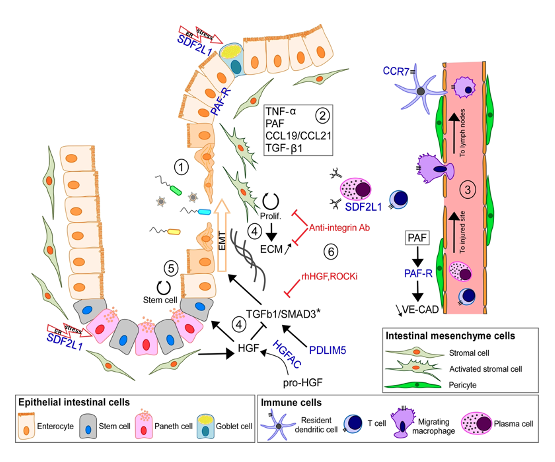
Using a combination of genome-wide association, fine mapping, DNA sequencing and transcriptomic studies we aim to identify causal genes, their protective and predisposing variants, and biological contexts in which they exert their influences.  (images from PMID: 25559196, 29420262, 36038634).

We aim to define the rare and common variants, both coding and non-coding, that influence an individual’s probability of developing one of the inflammatory bowel diseases (IBD) known as Crohn’s disease (CD) and ulcerative colitis (UC).

It is important to identify protective and predisposing genetic variants for multiple reasons: 

(1) to develop genetic tools such as polygenic risk scores that can aid in diagnosis; 

(2) to increase success rates of drug development efforts; and 

(3) to obtain a more comprehensive understanding of pathophysiologic mechanisms. 

While some IBD genes may be ubiquitously expressed, many are enriched in specific cells and tissues. We therefore aim to identify the appropriate biological context in which to study IBD genes and their causal variants, for example the relevant tissues and cell types.

Selected Publications:

Large-scale sequencing identifies multiple genes and rare variants associated with Crohn’s disease susceptibility. Sazonovs A, et al. Nat Genet. 2022 Sep;54(9):1275-1283. doi: 10.1038/s41588-022-01156-2. Epub 2022 Aug 29.PMID: 36038634

Fine-mapping inflammatory bowel disease loci to single-variant resolution. Huang H, et al. Nature. 2017 Jul 13;547(7662):173-178. doi: 10.1038/nature22969. Epub 2017 Jun 28. PMID: 28658209 

High-density mapping of the MHC identifies a shared role for HLA-DRB1*01:03 in inflammatory bowel diseases and heterozygous advantage in ulcerative colitis. Goyette P, et al. Nat Genet. 2015 Feb;47(2):172-9. doi: 10.1038/ng.3176. Epub 2015 Jan 5. PMID: 25559196 

Elucidating the cell circuitry in human epithelial cells and monocytes / macrophages that predispose to, or protect against, IBD

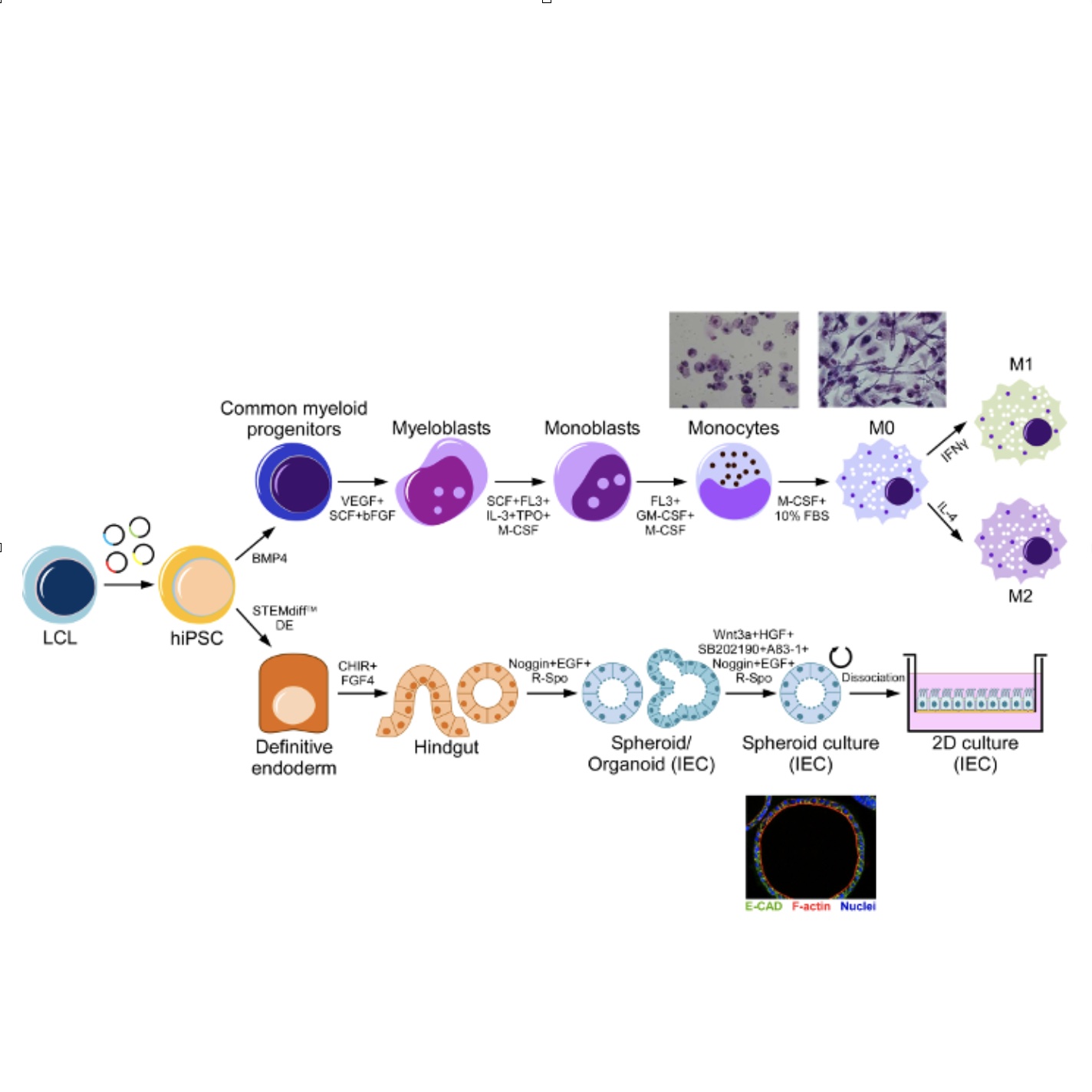
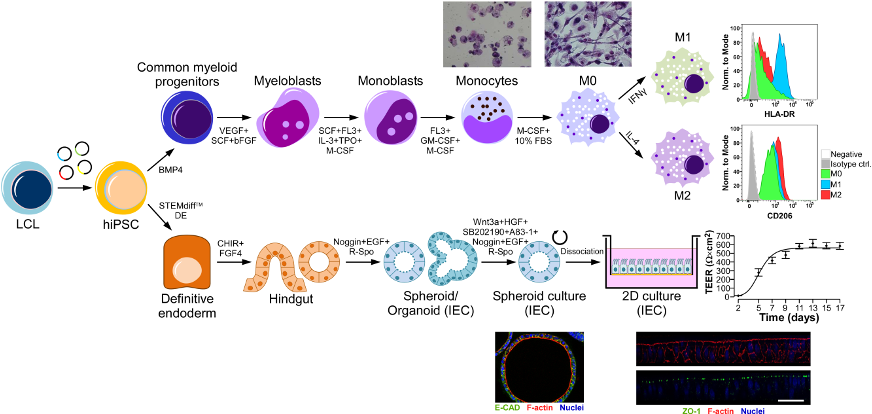
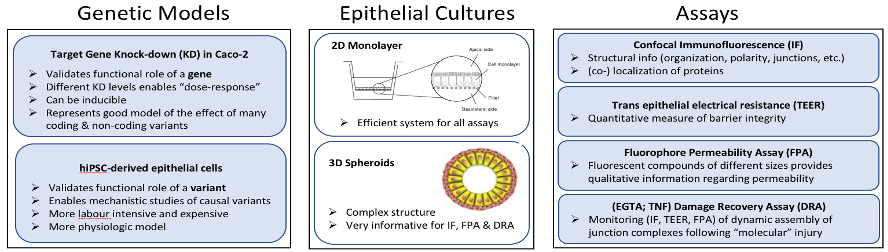
Patient blood, Lymphoblastoid cell lines (LCLs), or skin fibroblast cells are reprogrammed into hiPSC, and then differentiated in a stepwise fashion either into monocyte or macrophage cultures (top) or into 2D and 3D intestinal epithelial cultures (bottom). These models are used to evaluate the impact of genetic variants on structural and functional characteristics.

We aim to use the information from our IBD genetic studies to guide and prioritize our functional studies.  We will focus this work on genes that are expressed in intestinal epithelial cells and/or in monocyte/macrophages.  Epithelial cells and monocyte/macrophages are important players in IBD, and we have developed significant expertise in developing and studying genetics disease models including patient-derived human induced pluripotent cell (hiPSC) models of intestinal epithelial cells (2D and 3D) and/or in monocyte/macrophages and their functions.  These models can be gene- (knock down/over expression) or genotype-specific (e.g. genotype-specific hiPSC, CRISPR, etc.).

Models, culturing approaches and assays used for our studies of intestinal barrier functions.  

Selected publications:

Prostaglandins and calprotectin are genetically and functionally linked to the Inflammatory Bowel Diseases. Karaky M, et al. .PLoS Genet. 2022 Sep 26;18(9):e1010189. doi: 10.1371/journal.pgen.1010189. Online ahead of print.PMID: 36155972

IBD-associated G protein-coupled receptor 65 variant compromises signalling and impairs key functions involved in inflammation. Mercier V, et al. .Cell Signal. 2022 May;93:110294. doi: 10.1016/j.cellsig.2022.110294. Epub 2022 Feb 24.PMID: 35218908

Functional screen of inflammatory bowel disease genes reveals key epithelial functions. Ntunzwenimana JC, et al. Genome Med. 2021 Nov 11;13(1):181. doi: 10.1186/s13073-021-00996-7.PMID: 34758847

C1orf106 is a colitis risk gene that regulates stability of epithelial adherens junctions. Mohanan V, et al. Science. 2018 Mar 9;359(6380):1161-1166. doi: 10.1126/science.aan0814. Epub 2018 Feb 1.PMID: 29420262 

Uncover the biological heterogeneity that is at the basis of clinical heterogeneity in IBD, and develop powerful diagnostic and prognostic biomarkers & tools.

We aim to unravel the biological heterogeneity of CD and UC using genetic, genomic and immunologic profiling of patient blood and stool samples and a subset with intestinal biopsies/surgical specimens, with a particular focus on incident cases of CD and in longitudinal studies of response to therapy in CD and UC. This enables us to look at “baseline” heterogeneity as well as heterogeneity in the context of a “stimulus” – molecularly targeted therapies – and to identify and validate genetic, genomic, immunologic markers with predictive potential.

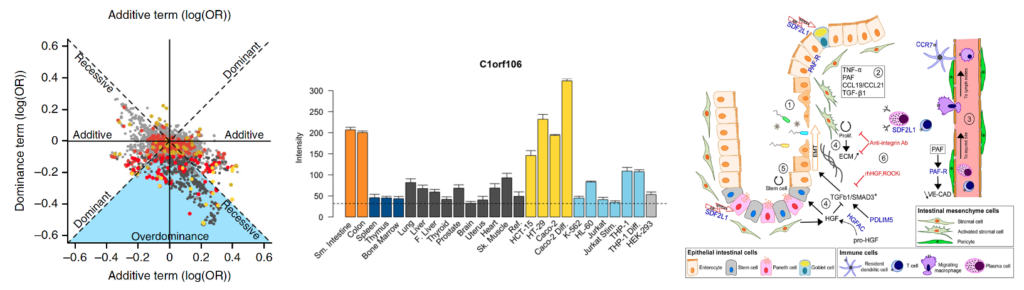
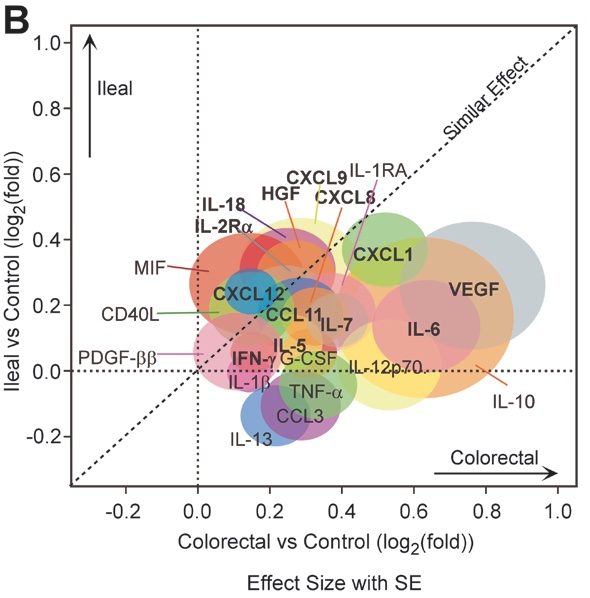
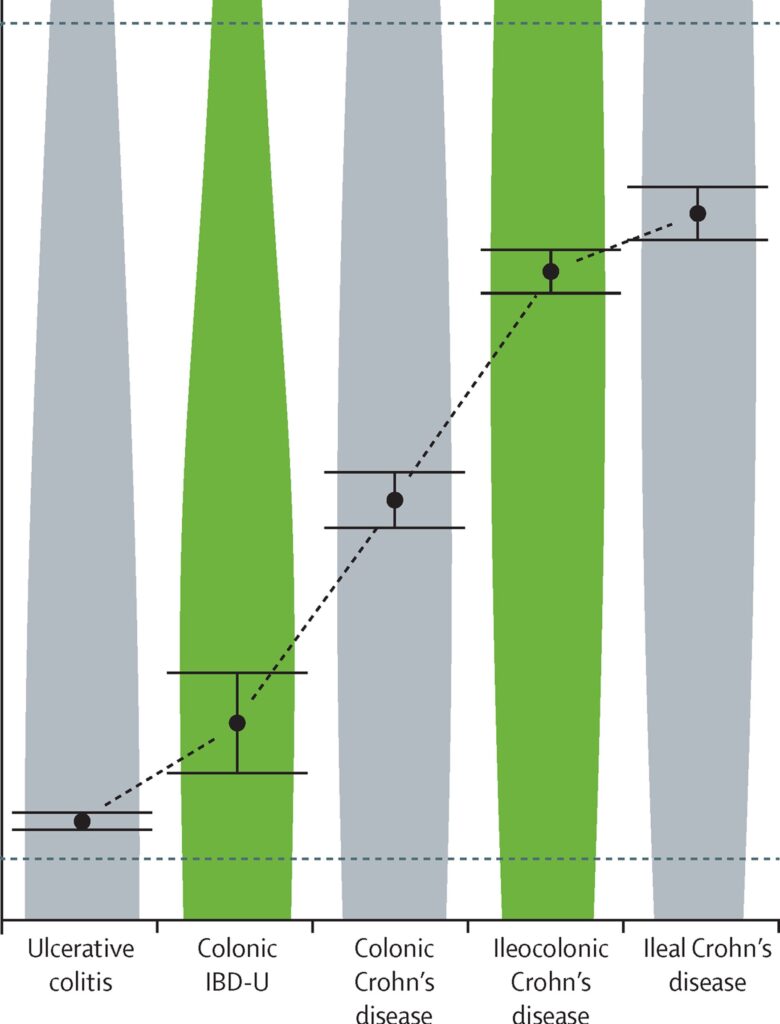
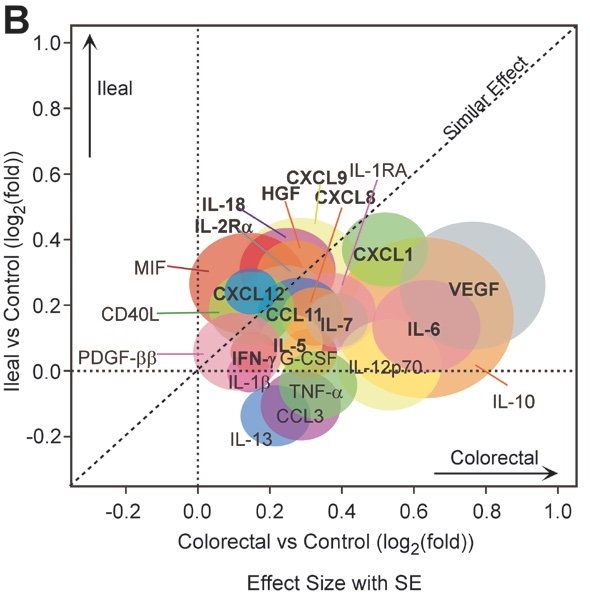
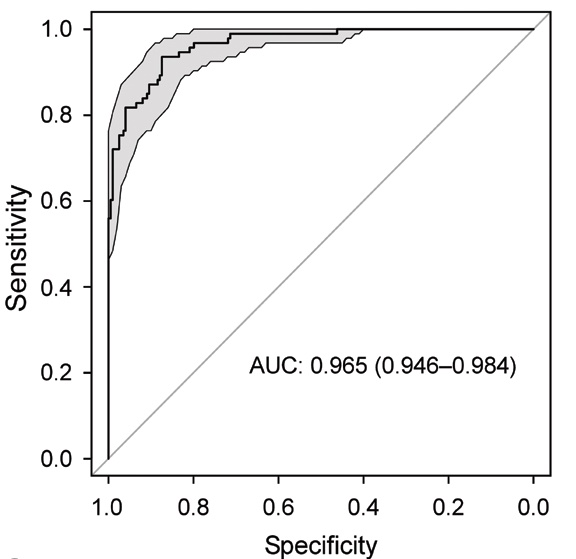
Genetic risk scores developed in ~35,000 IBD patients demonstrate that that ileal and colonic Crohn’s disease are at least as genetically distinct from each other as they are from ulcerative colitis (Left Panel).  Serum proteomics support the hypothesis that disease location is an intrinsic aspect of a patient’s disease (in part genetically determined) and the complex set of circulating cytokines, chemokines, growth factors etc.associated with CD reflect the complex interactions between immune, epithelial and mesenchymal cells (Middle Panel). Serum metabolomics in the same patients has enabled the identification of a set of six lipid metabolites that is sufficient to build a model with very beneficial sensitivity and specificity performance. (Right Panel)

Selected publications:

Serum Analyte Profiles Associated With Crohn’s Disease and Disease Location.  Boucher G, et al. Inflamm Bowel Dis. 2021 Jun 9:izab123. doi: 10.1093/ibd/izab123.. PMID: 34106269

Comprehensive and Reproducible Untargeted Lipidomic Workflow Using LC-QTOF Validated for Human Plasma Analysis.  Forest A, et al. J Proteome Res. 2018 Nov 2;17(11):3657-3670. doi: 10.1021/acs.jproteome.8b00270. Epub 2018 Oct 10. PMID: 30256116 

Biomarker-guided stratification of autoimmune patients for biologic therapy. Ivison S, et al. Curr Opin Immunol. 2017 Dec;49:56-63. doi: 10.1016/j.coi.2017.09.006. Epub 2017 Oct 17. PMID: 29053992 

Inherited determinants of Crohn’s disease and ulcerative colitis phenotypes: a genetic association study.  Cleynen I, Boucher G, et al. Lancet. 2016 Jan 9;387(10014):156-67. doi: 10.1016/S0140-6736(15)00465-1. Epub 2015 Oct 18. PMID: 26490195 

Congrès québécois de recherche sur les MICI – Programme Préliminaire

Mercredi 21 mai : 8h30 à 17:45 au CR-CHUM 

SESSION 1: Facteurs de risque des MICI. 
Co-président(e)s: Marika Sarfati (CR-CHUM) et François Boudreau (U. de Sherbrooke) 
 PLÉNIÈRE:  Mark J. Daly, Broad Institute et Massachusetts General Hospital 
Conférencière invitée : Corinne Maurice, McGill University 
Conférencier invité : Martin Pelletier, Université Laval 
Présentation par un(e) stagiaire : sélectionné(e) parmi les abrégés 
Table ronde (tous les présentateurs et co-présidents de session) 
 
Session d’affiches 1 & kiosques des commanditaires 
 
SESSION 2: Parties prenantes en MICI (noms des conférenciers à venir). 
Co-président(e)s: Colette Deslandres (CHU Ste-Justine) et Alain Bitton (CUSM) 
 Patient partenaire: Le rôle des patients-partenaires dans la recherche sur les MICI 
Comment la communauté de recherche peut aider les associations de patients 
Rôle de l’industrie et des partenariats dans les MICI – la scène québécoise 
Table ronde (tous les présentateurs et co-présidents de session) 
 
Session d’affiches 2, kiosques des commanditaires & Dîner 
  
SESSION 3: Mécanismes physiopathologiques dans les MICI. 
Co-président(e)s: Geneviève Pépin (UQTR) et Jean Sévigny (CHUL) 
 PLÉNIÈRE:  Judy H. Cho, The Icahn School of Medicine at Mount Sinai 
Conférencière invitée : Laurence Chapuy, CHU-SJ 
Conférencier invité : Robert Battat, CHUM 
Présentation par un(e) stagiaire : sélectionné(e) parmi les abrégés 
Table ronde (tous les présentateurs et co-présidents de session) 
 
Session d’affiches 3 & Kiosques des commanditaires 
 
SESSION 4: Translation en meilleur diagnostic, traitement et guérison. 
Co-président(e)s: Emilia Falcone (IRCM) et Mathieu Allez (CUSM) 
 PLÉNIÈRE: Randy Longman, Weill Cornell Medicine 
Conférencière invitée : Karine Tremblay, Hôpital de Chicoutimi et U. de Sherbrooke 
Conférencier invité : Jean-François Beaulieu, Université de Sherbrooke 
Présentation par un(e) stagiaire : sélectionné(e) parmi les abrégés 
Table ronde (tous les présentateurs et co-présidents de session)